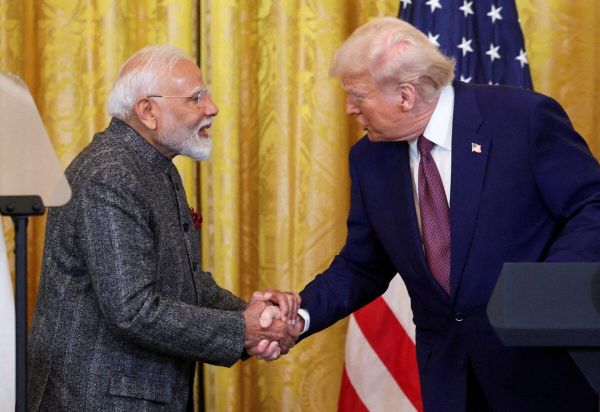
What you need to know about the US-Israeli Military Merger


Ibrahim Safi – The Public Trust
In July 2026, the House passed a United States-Israel defense technology cooperation initiative in a 216 to 212 vote, famously touted as the integration of the United States and Israeli militaries (U.S. Congress). This certainly appears to be one of the most consequential decisions passed by the United States government, for the integration of both armed forces serves to increase American involvement in Israeli affairs, as well as Israeli access to American funds (Quincy Institute). However, aside from the bombastic headlines and media, what are the real intentions behind this deal, and what are the broader geopolitical consequences upon the United States and the broader world?
The US-Israeli military integration focuses upon embedding Israeli technological and production capabilities into the American industrial market and defense industry, joining in cooperative research, co-production, and data fusion in fields such as AI, cybersecurity, and missile defense (U.S. Congress, U.S. DoD). Effectively, this bill serves to integrate military technology, research, and intelligence in order to ensure greater coordination and cooperation between Israeli and American militaries. Officially, no formal strategic merger (i.e., both militaries falling under the same command) has occurred, but many analysts do perceptively point out that this bill serves as a stepping stone towards that possibility, as strategic mergers often require prior integration before being possible (Quincy Institute). Additional articles within the bill include: the removal of congressional confirmation to remove the EA (executive agent, DoD or DHS component executive), shifting this oversight solely to the Department of War, and the replacement of the unilateral EA, now requiring the US Secretary of War to consult directly with the Israeli Defense Minister to establish the initiative (ACLU).
Supporters of the bill promote it as a means to increase the jobs and industrial scale of the defense sector in the US, as well as use Israeli ground experience to keep up with Chinese military innovations, especially in drone warfare (AIPAC, JINSA), whilst critics point out how key American industries and governmental roles in defence now have Israeli purview and how this explicitly increases Israeli influence upon the US government and military, even if the strategic merger has not occurred as of now (Quincy Institute, ACLU). Additionally, whilst before the US defense industry treated Israel as a client, with primary priority in production going towards supporting the US military, now the Israeli military is an equal benefactor of the defense industry with the relationship being far more direct (CSIS). The obvious issue this raises is that with the various war crimes and genocide the Israeli military is committing in the Middle East, the US government now becomes directly complicit in its support, as it is actively facilitating the Israeli usage of American industry towards fuelling their military ambitions. One of the most worrying implications is the Israeli usage of AI based targeting systems, which is behind automatic killing protocols, seen affecting civilians very often, such as their Lavender and Gospel products; the concern being the integration of these technologies into the US military could result in such a doctrine becoming a norm in the American command (ACLU).
The broader political context too matters significantly. For the past 80 years, the US public was generally in favor of unconditional support for Israel, based on narratives found in the Scofield bible. However, the younger generation, especially Gen Z voters, shows a reduced support for Israel, the first generation in fact to be majority against unconditional support for Israel, one of the few bipartisan issues in American politics today (Quincy Institute). Thus, this move to integrate the Israeli military with the American military, further entangling the two governments, appears to many analysts as a way to guarantee future American support for Israel, despite popular objections towards such (Quincy Institute). As of the current document’s signing, whilst strategic union is not achieved yet, the limits that once existed in American foreign aid to Israel has effectively been lifted, as American industries, technology, research and manufacturing has effectively merged with the Israeli defense industry, thereby allowing in the future for greater concessions to be given to Israel, this time not in the form of a foreign aid but towards an integrated defense partner. Thereby, this serves two functions: to increase the immediate and upcoming aid sent to the Israeli military and to limit future politicians from limiting support for the Israeli military. In many ways, this itself serves as a form of lost sovereignty for the American state, for now Israel can access its military funding and industries unimpeded as an integrated partner, allowing for Israeli policy makers to have a greater influence and say upon the American defense sector. Additionally, with Israeli firms gaining preferential access to American defense funding, American businesses in those fields will face increasing competition and possible displacement, thereby posing a further serious risk of eroding America’s long term military sovereignty; if she loses her weapons manufacturing capability and ownership, her military too is significantly compromised.
With an increasingly skeptical European Union, which is moving towards Palestinian recognition and condemnation of Israel, as well as a broader narrative from China and Russia condemning Israel and the American populace’s discontent with support for Israel, this bill is indeed very controversial, serving to prove the American elite’s commitment towards Israel whilst risking alienation from allies in Europe and the Americas (Momtaz, Rym). In a time with increasing competition from China, increased moves towards economic and military autonomy in Europe, Turkey and Iran moving to consolidate geopolitical power in the Middle East and the Russian push in Ukraine continuing, this would appear to be a poor time to alienate allies (Quincy Institute). Whilst China builds upon the BRICS initiative and the Belt and Road initiative, the Americans alienating military and economic allies serves to give a stronger hand in the future to powers like China and Russia whilst diminishing American power. Many politicians such as Thomas Massie, Adam Smith, and the Quincy Institute are advocating for a revocation of this bill and the reduction or outright severance of ties with Israel, focusing on American sovereignty, and they are increasing in popularity with the American youth. The main question remains whether this bill is reversible or whether our government has permanently tied us to the affairs of Israel as they continue committing war crimes and genocides in the Middle East, fulfilling an apocalyptic cause.
Cited works
U.S. Congress, House of Representatives. National Defense Authorization Act for Fiscal Year 2027. H.R. [Insert Final Bill Number], 119th Cong., 2nd Sess., 2026. Section 224: "United States-Israel Defense Technology Cooperation Initiative."
U.S. Congress, Senate. National Defense Authorization Act for Fiscal Year 2027. S. [Insert Final Bill Number], 119th Cong., 2nd Sess., 2026. Section 1217: "United States-Israel Defense Technology Cooperation Initiative."
U.S. Congress. United States-Israel Finding Unique Technologies to Upgrade Reciprocal Exchange Security (FUTURES) Act. H.R. [Insert Bill Number], 118th/119th Cong., 2025-2026.
U.S. Department of Defense. Report on Defense Technology Cooperation with Israel: Implementation of Section 224 of the FY2027 NDAA. Washington, D.C.: Government Publishing Office, 2026.
U.S. Government Accountability Office (GAO). Defense Industrial Base: Risks and Opportunities in Foreign Co-Production Agreements. GAO-26-543. Washington, D.C., July 2026.
Quincy Institute for Responsible Statecraft. The Risks of Permanent Military Entanglement: A Review of the FY2027 NDAA Israel Provisions. Policy Brief, July 2026.
American Israel Public Affairs Committee (AIPAC). Strengthening the Alliance: The Strategic Necessity of the US-Israel Defense Technology Cooperation Initiative. White Paper, June 2026.
Center for Strategic and International Studies (CSIS). Integrating AI and Autonomous Systems: The US-Israel Pathway. Report by the International Security Program, August 2026.
Jewish Institute for National Security of America (JINSA). Beyond Aid: The Evolution of the US-Israel Strategic Partnership. Special Report, 2026.
American Civil Liberties Union (ACLU). Privacy and Ethical Concerns in US-Israel Data Fusion Initiatives. Legal Analysis, July 2026.
Momtaz, Rym. "Europeans Are Quiet Quitting the United States." Strategic Europe, Carnegie Europe, 6 May 2026, carnegieendowment.org/europe/strategic-europe/2026/05/europeans-are-quiet-quitting-the-united-states.