Understanding the Saudi-Yemeni Conflict

Ibrahim Safi – The Public Trust
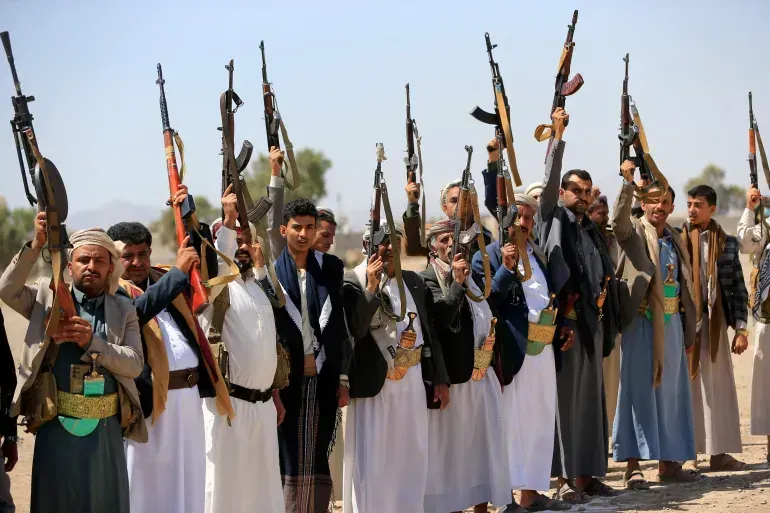
This month, the conflict in Yemen has sparked headlines globally, with alleged claims of attempted Yemeni bombings of the holy Islamic cities of Mecca and Medina, as well as of civilian installations across Saudi Arabia [1]. Whilst those claims remain contested, with little basis for Saudi Arabia's accusations, and outright denial by the Houthis of Yemen [2], they do spark a broader question of what exactly is going on between Yemen and Saudi Arabia, specifically pertaining to the Houthis.
The Houthis as an organization, officially “Ansar Allah” (translating to “Partisans of God”), have their roots in the Zaydi sect of Shia Islam [3]. The Zaydis believe that only a member of Ahl ul Bayt (the family of the Prophet Muhammad, peace and blessings be upon him) can hold political rule over the Muslim community [4]. Compared to the Twelver Shias (who constitute roughly 90% of the Shia population), they are often described as being far closer to Sunni Muslims (the largest sect of Muslims) in their beliefs, especially in their opinion of the companions of the Prophet, peace and blessings be upon him [4].
For centuries, the Zaydis ruled the Imamate of Yemen [5], which maintained an unbroken line of rulers until 1962, when they were overthrown in a revolution led by Arab nationalist officers [5], sparking a lengthy series of civil conflicts. Critically, after the revolution, Yemen was ruled by a secular, socialist government that sought to westernize the country, inspired by figures like Gamal Abdel Nasser of Egypt [5]. As in the rest of the Islamic world, the brief era of rulers aiming to westernize their countries left a religious vacuum, allowing both revivalist factions and newer religious traditions to enter the landscape [6].
In the 1980s, Yemen witnessed two religious trends: the first, a Salafi-Wahhabi movement backed by Saudi Arabia; the second, a Zaydi revivalist movement, largely a reaction to the Salafi-Wahhabi current, seeking to preserve Zaydi education and traditions [6]. This revivalist movement is the key origin of the Houthi movement, named after Hussain al-Houthi, who radicalized and politicized the movement [6]. A key point to note is that only 40% of Yemen's population is Zaydi, whilst the remaining population is largely Sunni [5]. Historically, conflict between Zaydis and Sunnis was rare, and their relationship was far more cordial than that between Twelver Shias and Sunnis. Unlike in places like Lebanon, Yemen’s conflict did not take a sectarian angle, but rather a geo-strategic angle, despite the religious origins of the Houthis, as it evolved into a conflict between a native government fighting foreign-supported entities [6].
During the longest period of post-Imamate rule, the country was led by Ali Abdullah Saleh, whose Marxist policies alienated much of the country’s religious population and, amid the Arab Spring protests, led to his resignation in 2011 [7]. However, a Gulf Cooperation Council (GCC) backed deal led to Saleh’s vice president, Abdrabbuh Mansur Hadi, taking power to avoid a full-scale conflict [8]. Hadi tried to resolve much of Yemen’s civil problems, including religious differences (between Wahhabis and the Zaydi and Sunni populations), separatism, and economic issues, with the National Dialogue Conference.
However, these negotiations largely failed, as Saleh himself remained unwilling to relinquish power and had forged an alliance with the Houthis, leading to the formation of military units loyal to Saleh that joined the Houthi ranks [9]. Hadi’s government responded by removing fuel subsidies, and this effectively started the Yemeni civil war, with the Houthis taking the capital of Sana’a, leading to the collapse of the Yemeni state. As the Houthis and Saleh advanced, Hadi fled to Saudi Arabia and sought aid from the GCC [9].
This is where Saudi Arabia enters the picture; in 2015, they led a military intervention in Yemen to remove the Houthis and restore Hadi [9]. This resulted in Iran backing the Houthis, officially out of Shia unity, unofficially to curtail Saudi Arabia, which is their main geopolitical rival. Officials will claim that the Saudi-Iranian rivalry is religious in nature, but there is a strong economic and geostrategic element inherent in this rivalry, pertaining to control of trade nodes as well as oil exports. Yemen, in this context, is geopolitically critical, as it sits on the chokepoint of the Bab al-Mandeb Strait [9], which controls all traffic entering and exiting the Red Sea, and it can be argued that the intensity of proxy support is to secure this vital geopolitical trade node.
For a majority of the conflict, the Houthis controlled Sana’a and pushed towards seizing the Port of Aden, a crucial port, along with Mokha, controlling the entrance to the Bab al-Mandeb Strait, whilst the Saudis intervened directly in the north [9], and the GCC backed an anti-Houthi coalition in the south [8]. The war and intervention were themselves crucial, as Yemen depends heavily on imports for food, medicine and technology. With the GCC intervention, large parts of the country faced a blockade and an imminent humanitarian crisis [10].
By the end of 2021, according to the UN, an estimated 377,000 people had died [10], with 70% of the deaths being attributed to children under the age of 5 [10]. 15.6 million Yemenis were pushed into extreme poverty according to the same statistic [10], and 16.2 million people faced acute food insecurity [10]. It goes without saying that the Saudi intervention caused a severe humanitarian crisis in Yemen, resulting in lasting consequences for Yemen’s civil population, as well as fueling resentments that echo into the current conflict.
By 2017, the Houthi-Saleh alliance collapsed entirely due to a power struggle for leadership, resulting in Saleh being killed by the Houthis in December of 2017 [9], thereby consolidating the Houthis into a more unified force. The same could not be said for the anti-Houthi coalition, which fractured the following year, as the UAE and Saudi Arabia, the main benefactor, began differing on their visions over Yemen [8]. The UAE backed the Southern Transitional Council, a coalition of Yemeni factions seeking a separate country from the Houthis in return for greater economic concessions, and Saudi Arabia backed the recognized Yemeni government of Hadi [8]. Whilst attempts at negotiating ceasefires and peace settlements offered hopes of peace and brief respites, no political solution was generally achieved, and the Saudis opted for a plan to significantly reduce their presence in Yemen in 2022, thereby resulting in a de jure stalemate between the two sides, that is, until 2026 [7].
On September 10th 2026, the Houthis launched a massive offensive and captured the port of Al-Mukha [11], a strategically important Red Sea port, gaining control of a growing stretch of the Red Sea coastline, including the Dhubab and Mayyun islands [11]. This, in coordination with Iran, has enabled the Houthis to close the Bab al-Mandeb Strait, which would be far more consequential than Iran's closure of the Strait of Hormuz [11]. Saudi Arabia thus launched a renewed offensive against the Houthis, prompting their retaliation against Saudi Arabia, which resulted in the overall escalation of the conflict and claims of attempted attacks on the Islamic holy sanctuaries [1,12].
As of September 23rd, 2026, Saudi Arabia has requested aid from Israel and the United States against the Houthis [13,14], with both having since rejected the offer, leaving the Saudis to fend for themselves. With Iranian pressure on the Hormuz Strait and Houthi threats to close the Bab al-Mandeb Strait in coordination, this conflict takes a new dimension as the broader Middle Eastern conflict expands.
Sources:
1. “Saudi-Led Coalition Says It Destroys Houthi Drone South of Mecca.” Reuters, 16 Sept. 2026. https://www.internazionale.it/ultime-notizie-reuters/2026/09/16/saudi-led-coalition-says-it-destroys-houthi-drone-south-of-mecca 2. Does the Video Show Houthis Attempting to Target the Kaaba in Saudi Arabia?” Misbar, 17 Sept. 2026. https://www.google.com/url?q=https://www.misbar.com/amp/en/factcheck/2026/09/17/does-video-show-houthis-attempting-target-kaaba-saudi-arabia?utm_source%3Dchatgpt.com&sa=D&source=docs&ust=1790140406094619&usg=AOvVaw0gJVlW1dCWXbMEHIWRuBm2 3.Carnegie Endowment for International Peace. “Islamic Institutions in Arab States: Mapping the Dynamics of Control, Co-option, and Contention.” Carnegie Endowment for International Peace, 7 June 2021. https://carnegieendowment.org/research/2021/06/islamic-institutions-in-arab-states-mapping-the-dynamics-of-control-co-option-and-contention 4. Lucas, Scott, and Egbal Almahatwary. “Zaydī Shīʿism.” St Andrews Encyclopaedia of Theology, edited by Brendan N. Wolfe et al., University of St Andrews, 2025. https://www.saet.ac.uk/Islam/ZaydiShiism 5. Madelung, Wilferd. “Shiʿites in Arabia.” Encyclopaedia Iranica. https://www.iranicaonline.org/articles/shiites-in-arabia 6. Albloshi, Hamad H. “Ideological Roots of the Ḥūthī Movement in Yemen.” Journal of Arabian Studies, vol. 6, no. 2, 2016, pp. 143–162. Taylor & Francis, doi:10.1080/21534764.2016.1247522. 7. United Nations Department of Political and Peacebuilding Affairs. “Special Envoy Yemen.” United Nations, Department of Political and Peacebuilding Affairs. https://dppa.un.org/en/factsheet/special-envoy-yemen 8. Special Envoy Yemen.” United Nations, Department of Political and Peacebuilding Affairs. https://dppa.un.org/en/factsheet/special-envoy-yemen 9. Sharp, Jeremy M. Yemen: Civil War and Regional Intervention. Congressional Research Service, 2025. https://www.congress.gov/crs_external_products/R/PDF/R43960/R43960.31.pdf 10. United Nations Development Programme. Assessing the Impact of War in Yemen: Pathways for Recovery. United Nations Development Programme, 2021. https://www.undp.org/sites/g/files/zskgke326/files/2022-09/Impact%20of%20War%20Report%203%20-%20QR_0.pdf 11. Reuters. “How Yemen’s Houthis Went from a Small Mountain Militia to a Big Regional Threat.” Reuters, 17 Sept. 2026. https://www.reuters.com/world/middle-east/how-yemens-houthis-went-small-mountain-militia-big-regional-threat-2026-09-17/ 12. Reuters. “Yemen Offensive Elevates Enigmatic Houthi Commander’s Standing.” Reuters, 16 Sept. 2026. https://www.reuters.com/world/middle-east/houthi-red-sea-offensive-elevates-enigmatic-yemeni-commanders-standing-2026-09-16/ 13. Reuters. “Saudi Crown Prince Sought US Military Help from Trump with Houthis, Sources Say.” Reuters, 11 Sept. 2026. https://www.reuters.com/world/trump-declines-saudi-crown-princes-call-us-strikes-houthis-axios-reports-2026-09-11/ 14. Zaken, Danny. “Saudi Arabia Turns to Israel as US Weighs Strikes on Houthis.” Israel Hayom, 13 Sept. 2026. https://www.google.com/url?q=https://www.israelhayom.com/2026/09/13/saudi-arabia-turns-to-israel-as-us-weighs-strikes-on-houthis/