Israel’s Incursion into Lebanon


Ibrahim Safi – The Public Trust
As of June 4, 2026, peace talks between Israel and Lebanon, facilitated by the US, have fallen apart. A key reason is that the peace talks, which intentionally left out Hezbollah, which is, along with the Israeli government, a main party in this conflict, resulted in a prompt retaliation by the group. This conflict has been labeled by many as ‘The second Nakba’ due to the sheer scale of human suffering and shifting geopolitical realities it has entailed.
Lebanon is a religiously and ethnically diverse country, comprising six main groups, though many more exist within those groups. These groups include Sunni and Shia Muslims, Maronite and Orthodox Christians, Druze, and Alawites. In the 1970s and 1980s, tensions between these groups, partially due to a legacy of colonialism, partially due to a legacy of political meddling from outside powers, particularly Israel and Syria, resulted in a sectarian civil war. Of particular importance to this story is southern Lebanon, which is primarily inhabited by Lebanon’s Shia population, who constitute roughly 27% of the country’s inhabitants, while the other share is concentrated in the Beqaa valley. In the chaos of the Lebanese Civil War during this period, one of the key factions was made up of Palestinian fedayeen fighters, who used southern Lebanon as a base of operations to strike against Israeli positions. Using the existence of fedayeen troops in the region, Israeli troops invaded southern Lebanon in 1982, resulting in an occupation of the region that lasted until 2000. This background is where many of the region's conflicts today begin (Haaretz).
Many of the Shia of southern Lebanon fell under effective Israeli occupation, and many were displaced because of the ruin caused by both the civil war and the harsh Israeli occupation. For instance, the Sabra and Shatila massacres during this period, whose victims were mainly Lebanese Shias and Palestinians, were considered acts of genocide by the UN General Assembly. Additionally, the recently launched Islamic Revolution in Iran sought to export its ideas to Shia communities outside of Iran, and the plight of the Lebanese Shias instilled a strong sense of partnership with the Iranians. The origin of Hezbollah is believed to be a result of a combination of Israeli brutality and Iranian funding, leadership, and broader partnership. In a similar guerrilla war of the time, the Afghan mujahideen were fighting against the occupying Soviets. Hezbollah similarly began attacking the occupying Israeli forces, who, like the Soviets, responded with harshness toward the local civilians. The world, distracted by the Iran-Iraq war and its implications on global oil trade, as well as the Soviet-Afghan war, overlooked the brutality of the Israeli occupation of southern Lebanon, as well as the radicalization of an entire generation of Lebanese Shia, driven by Israeli brutality and colonization. (Haaretz).
In partnership with the Syrian government, which was also occupying a share of Lebanon until 2005 and was another ally of Iran, Hezbollah became established in the Beqaa valley, which was under Syrian occupation. With this partnership, Hezbollah became a fierce enemy of the Israelis in their occupation of southern Lebanon, especially with financial and logistical support coming from Iran. As Hezbollah began to gain control of the region, it transformed from a militant organization into a political one, governing the area and providing services to its citizens. After the Israeli withdrawal in 2000, Hezbollah gained firm control over southern Lebanon and used it as its base of operations (Warfronts).
In 2026, after Israel’s campaign in Gaza, and later Lebanon and the Golan Heights, Hezbollah’s resistance against Israel intensified, and it constantly attacked Israeli-controlled territories, especially in the north. These attacks were largely a response to both the ongoing Israeli genocide of Palestinians, as well as Israeli belligerence against Syria, Lebanon, and Iran, Hezbollah’s main benefactor. A notable event in this conflict was the pager incident, in which Israeli secret services rigged the pagers of many senior Hezbollah members to explode, almost destroying their organization, yet surprisingly, even with the murder of their leader, Hasan Nasrallah, they made a recovery and continued rearming and preparing for conflict (Warfronts).
On February 28, 2026, the US and Israel commenced their war with Iran, assassinating their Supreme Leader, Ayatollah Khamenei. Most of the world focused on the Iranian blockade of Hormuz and the subsequent economic fallout that occurred in Lebanon. Starting on March 2, 2026, the Israeli army began an invasion of southern Lebanon up to the Litani River, all of which fell under Israeli occupation. The Israeli government then proclaimed that the occupied territory would be a buffer zone and commanded all of the Lebanese Shia community, especially south of the Zahrani river, to emigrate from the region or face consequences, resulting in the displacement of 1.4 million civilians, a figure that is continuously increasing (TimesofIsrael).
Those who did emigrate can no longer return to their homes, which are currently experiencing forced demolition and bulldozing like that in Gaza, as expressed by Israel Katz, Israel’s defense minister. Israeli sources claim that their objective is to remove Hezbollah from the region south of the Litani River, fitting their broader narrative of a buffer zone. However, this claim is not taken seriously by many, as it is a claim that has been made before for Palestinian territories and the Golan Heights, both of which are now being settled by Israeli colonists. This, paired with the forced expulsion of Lebanon’s Shia community, has led many to speculate that Israeli settlements will begin to appear in southern Lebanon. Bezalel Smotrich, Israel’s minister of Finance, has repeatedly and openly called for the full annexation of southern Lebanon, cementing the theory of forced colonization (Times of Israel). However, many do believe that Israel’s goal is far more ambitious, planning for a greater conquest, spurred by Hezbollah’s unyielding position in partnership with Iran, as well as a massive refugee crisis in Lebanon resulting from the recent 1.4 million displaced individuals (Poidevin, Olivia Le).
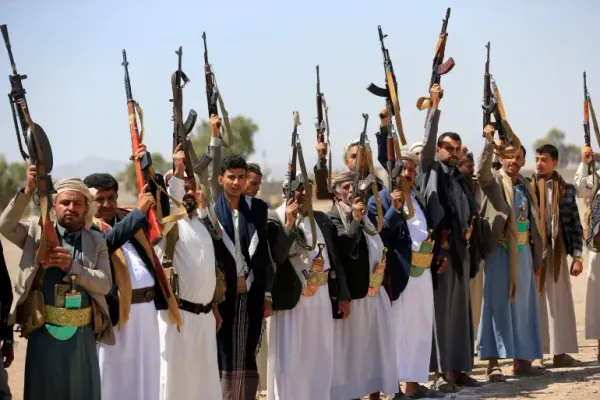
This brings us to today, where the discussions between Israel and the Lebanese state failed to account for Hezbollah, which maintained the intention to continue the fight against Israel alongside Iran. Iran, too, has ceased diplomatic discussions with Israel because of this, resulting in threats from the Houthis, another ally of Iran, to close the Bab al-Mandeb Strait, the chokepoint of all trade flowing through the Red Sea as well as the Suez Canal (Elimam, Ahmed, and Jana Choukeir). Given that Iran has fulfilled its promise of blockading the Strait of Hormuz, who knows what could happen with the Bab al-Mandeb Strait? If successfully carried out, this could have a far greater impact on the world economy than the Hormuz blockade and would significantly increase the leverage of the Iranian coalition.
Works Cited
Elimam, Ahmed, and Jana Choukeir. “Iran Declares Support for Hezbollah with Wider Peace Deal in Doubt.” Reuters, 5 June 2026, www.reuters.com/world/middle-east/iran-declares-support-hezbollah-with-wider-peace-deal-doubt-2026-06-05/.
Poidevin, Olivia Le. “UN Doubles Lebanon Aid Appeal as War Drives Surge in Humanitarian Needs.” Reuters, 5 June 2026, www.reuters.com/world/middle-east/un-doubles-lebanon-aid-appeal-war-drives-surge-humanitarian-needs-2026-06-05/.
“Katz Says Israel Will Hold “Security Zone” in South Lebanon until Hezbollah Threat Removed.” Timesofisrael.com, 2026, www.timesofisrael.com/liveblog_entry/katz-says-israel-will-hold-security-zone-in-south-lebanon-until-hezbollah-threat-removed/.
RealLifeLore. “Why Israel Is Trying to Conquer 10% of Lebanon.” YouTube, 15 Apr. 2026, www.youtube.com/watch?v=LwdSfdEkXPA. Accessed 6 June 2026.
WarFronts. “Has Netanyahu Gone Too Far in Lebanon?” YouTube, 2 June 2026, www.youtube.com/watch?v=PfW74iCYbpI. Accessed 6 June 2026.
Ofer Aderet. “What Historical Mossad Files Reveal about “Israel’s Most Planned War.”” Haaretz, 8 Sept. 2022, www.haaretz.com/israel-news/2022-09-08/ty-article-magazine/.highlight/israels-most-planned-war-historical-mossad-file-details-lebanon-policy/00000183-1dce-d11f-a1e3-5fde579b0000. Accessed 6 June 2026.