The Geopolitical Background of the Middle East | What You Need to Know


Ibrahim Safi – The Public Trust
As of June 14th, 2026, Iranian and American delegations are negotiating peace terms regarding the Iranian-American war of 2026. This conflict was in many ways significant as it featured the blocking of the Strait of Hormuz, as well as severe humanitarian crises, not only in Iran but in Lebanon as well, which is facing a genocide as of the writing of this article. In truth, many experts believe that the full consequences of this conflict are not yet understood and could have far-reaching consequences for the Middle East. But to understand such fears and the broader conflict, one must grasp the broader geopolitical context of the Middle East.
Our story begins over a century ago. With the end of the First World War, the Ottoman Empire lost control of the Levant, Mesopotamia, and the Hijaz, receding into Anatolia and eventually being reconstituted as the Republic of Turkey. The remaining territories were mainly distributed amongst the British Empire through the conquest of Palestine, Jordan, and Iraq; the French Empire through the conquest of Syria and Lebanon; and Saudi Arabia through the conquest of the Hijaz. To administer these newly conquered territories, each conquering power employed unique strategies: the Saudis integrated the Hijaz into the broader country, the British placed members of the Hashemite dynasty in Jordan and Iraq, and Palestine became a British mandate. Officially, Palestine became a protectorate to be shepherded into sovereignty; unofficially, Palestine became a British colony meant to bridge Egypt and Iraq. Syria, too, fell into a similar category with the French; under mandate rule, it became more directly part of the French colonial empire. In the mandated colonies, the colonial powers began to enfranchise certain groups over others to govern them and prevent unified resistance. In French Syria, the Alawites and Maronites were utilized to subdue the majority Muslim population, be they Sunni or Shia. These power cliques survived after independence, with the Lebanese government Maronite-dominated and the Syrian government, especially under the Al-Assad family, Alawite-dominated (Rogan, Eugene).
British Palestine, too, followed a similar trajectory, though with far more significant consequences. European Jews had been campaigning for a homeland for many years, and under Theodore Hertzel, they advocated for the land of Palestine, as many Jews claimed heritage in that land. This movement, to seek Palestine for Jews, became known as Zionism (GDF). For decades, the Ottoman government blocked these claims and attempts to purchase land by Zionists, famously under Sultan Abdulhamid II. But with the collapse of Ottoman power, anti-Jewish sentiments growing in Europe, and British authority over Palestine, the floodgates were opened, and European Jews began migrating en masse to Palestine, buying land with the encouragement of the British. Anti-Jewish sentiments in Europe hit a crescendo during the Second World War with the Holocaust, which renewed calls for a haven for the Jews. Amongst the British, French, and later Americans, a large wave of sympathy for the plight of the European Jews led to the concession to the Zionist demands and voting for the creation of the state of Israel, subsequently allowing for the Nakba and the continued genocide of Palestinians (Rogan, Eugene).
However, many historians have noted that this was done not solely out of goodwill from the Western powers but also for broader strategic goals. Amongst those discussed, there are three points commonly agreed upon: To limit the Jewish population in Europe, as communal tensions between Jews and other communities still existed (GDF); Evangelical Christian notions of accelerationism (to attempt to directly cause the end times, and the descent of Jesus Christ, peace be upon him) involving a prophecy of the Jews returning to Palestine (GDF); and to ensure a firm western ally in the Middle East, which had seen increased geopolitical relevance due to the discovery of Oil in the Gulf and the Suez Canal, which handled most shipping between the East and West. Broadly, first under the British Empire and later under the American Empire, control was maintained by protecting and guaranteeing global trade, which in turn led to the need to control the Suez Canal (GDF).
The history of the Middle East reached a turning point around the year 1980, as countries that opposed the Zionist state and were firm enemies shifted. Before 1980, the three main enemies of the Zionist state were Egypt, Syria, and Saudi Arabia, with Yemen, Jordan, and Iraq also occasionally. This too was another reason the Americans, and the West, were able to justify their continued support for Israel, as apart from Saudi Arabia and Jordan, the countries opposing Israel subscribed to the notions of Arab Socialism and were allied with the USSR (Helms, Richard). By far, the fight in these times had not yet taken on a religious aspect, as even the Palestine Liberation Organization was largely socialist. Three events ended this era: First, the Six-Day War, which humiliated Egypt and Syria and destroyed their prestige, leading to Egypt normalizing with Israel and the West and ceasing its support for the Palestinian cause. Second, the rise of Ba’athism, still firmly anti-Zionist, but dividing the coalition further, as countries like Saudi Arabia and Jordan were alienated by the explicit socialist messaging (GDF). Third, the Islamic revolution in Iran and the broader association of politics with religion were seen across the Islamic world, from Lebanon to Kashmir. From 1980 onwards, a new axis began to form against Israel, composed of Iran, Hezbollah in Lebanon, Syria, and the Houthis in Yemen. Given the explicitly Shi’i tilt of this coalition, and their motive to export Iran’s Islamic Revolution, a lot of the countries, from Saddam Hussein’s Iraq, to Hosni Mubarak’s Egypt, to Saudi Arabia, began to seek deeper partnership with the West in protection against Iran in particular (Caspian Report).
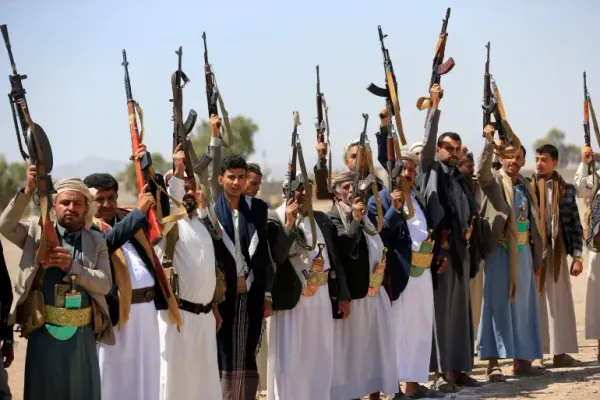
In many ways, this coalition still exists, and although some players have changed over time and shifted, Iran, Iraq, Hezbollah, and the Houthis, along with predominantly Sunni Hamas in Palestine, remain as the “Axis of Resistance” against both Israel and the West. Whilst limiting and possibly reversing Israeli expansion in the Middle East is a clear objective, Iran also seeks to dominate the region geopolitically, as it has historically done, be it under the Achaemenid or Sassanian empires, or under the Seljuq or Safavid empires (Caspian Report). In the modern geopolitical context, doing so requires control over trade nodes, particularly the Gulf and Suez trade routes, whilst also projecting power against rival powers. As of now, the most consequential economic players in the Middle East, as well as the broader world, remain Saudi Arabia and the UAE, primarily due to their oil exports and facilitation of business, thereby making them key players in the American global economic system (Caspian Report).
If Iran presents a threat to Israel, America will continue to act belligerently towards Iran, presenting a further threat to Saudi Arabia and the UAE through the impediment of key trade routes, resulting in America’s deeper commitment towards countering Iran. So, whilst a peace treaty is being negotiated with the intention of signing it, it is very unlikely that the Americans will allow Iran to gain hegemony over the Middle East, as that would see American power, not only in the region but in the broader world, decline.
Works Cited
Caspian Report. “Caspian Report.” Youtu.be, 2026, youtu.be/y0TZuhNixNk?si=TjrkXE1KK6Hs_62-. Accessed 16 June 2026.
GDF. “GDF.” Youtu.be, 2026, youtu.be/elQGTyqx2x8?si=J8J0RqwiYHD2SBqb. Accessed 16 June 2026.
---. “GDF.” Youtu.be, 2026, youtu.be/gd1zgizFujc?si=Nw9tJOdfY12rjbaa. Accessed 16 June 2026.
Helms, Richard. “As Director of Central Intelligence.” Readingroom, 1993, www.cia.gov/readingroom/docs/helms_as_dcia.pdf.
Rogan, Eugene. The Arabs: A History. London, Penguin Books, 2018.