How the 2026 FIFA World Cup Is Reshaping the World's View of Islam

Anthony Spadafore – The Public Trust
Every four years, people from around the world unite to watch elite football players from various nations and diverse cultures compete in the FIFA World Cup. With countless attentive eyes watching, these athletes are given the opportunity to not only showcase their skills but also their identities and beliefs on and off the field. This tournament has always been a display of talent and dedication, yet this year, the 2026 FIFA World Cup is telling a story much greater than the game itself. A story that lies beyond what can be seen on the big screen. A story that is quietly reshaping how millions of people perceive the religion of Islam.
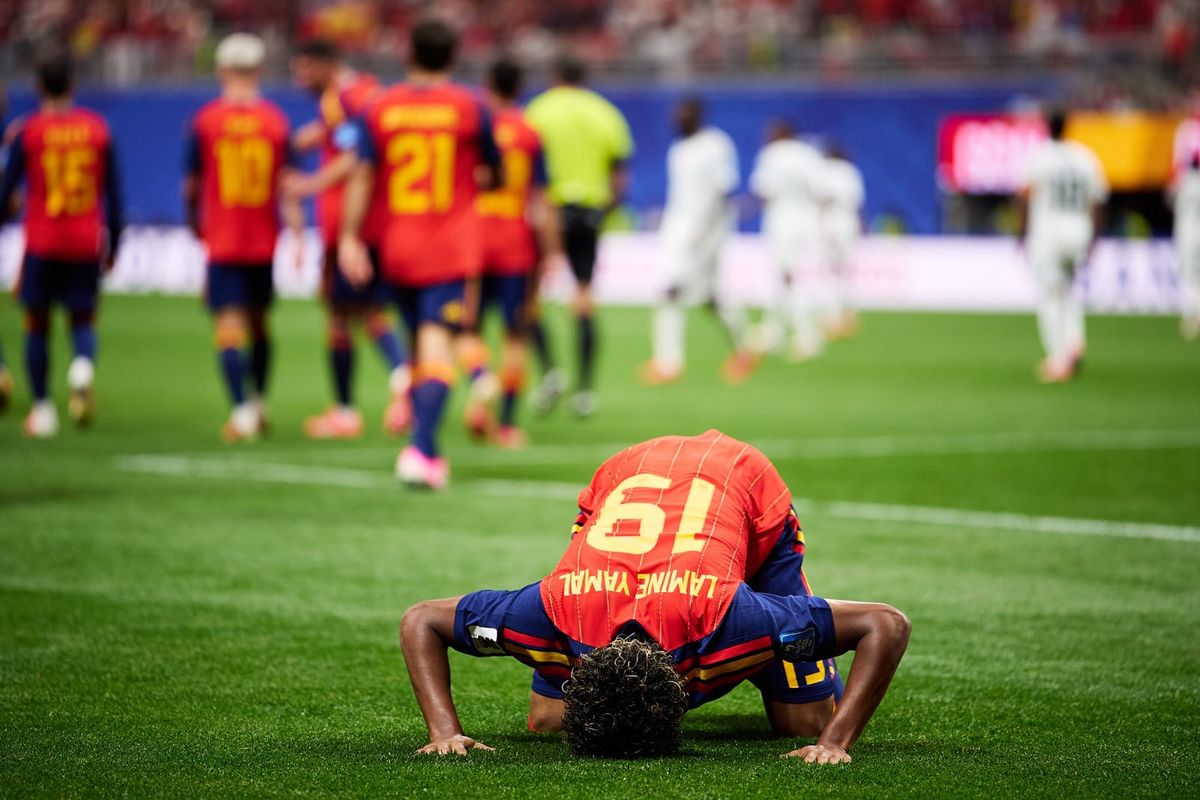
While watching teams like Egypt, Morocco, Spain, or Senegal, viewers might have noticed something unexpected following a scored goal or victory. After such significant events, other athletes typically celebrate by shouting, jumping, running to their teammates, dancing, etc. However, players from these teams can be seen prostrating, placing their foreheads on the ground.
For Muslims, this position, known as sujūd, is quite familiar. For non-Muslims, this may be something entirely new, prompting the following question:
“Why do these players prostrate themselves?”
This simple question, posed sincerely, is simultaneously opening doors of religious understanding and eradicating false paradigms of violence and ruthlessness in Islam. By placing their feet, knees, hands, and forehead on the ground, Muslim athletes are saying something powerful without uttering a single word: This success does not belong to me alone. Every blessing comes from Allah.
In verse 53 of Surah An-Nahl in the Qur’an, Allah says:
وَمَا بِكُم مِّن نِّعْمَةٍۢ فَمِنَ ٱللَّهِ ۖ ثُمَّ إِذَا مَسَّكُمُ ٱلضُّرُّ فَإِلَيْهِ تَجْـَٔرُونَ ٥٣
“Whatever blessings you have are from Allah. Then whenever hardship touches you, to Him ˹alone˺ you cry ˹for help˺” (The Clear Qur’an 16:53).
This verse is directly tied to the performance of sujūd, and what it means is that all of the blessings that one receives in this life come from Allah and Allah alone. One’s gratitude for any person, creature, or creation in this world should never surpass one’s gratitude for Him because it is He who is The Ever-Providing, The Constant Sustainer, The Bestower of Gifts, The Enricher, The Most Generous, and so much more. The verse continues by reminding the reader that even when circumstances are difficult, one must seek assistance only through him.
When millions of fans witness a professional athlete turning to express gratitude towards their creator before glorifying themselves for an achievement, existing perspectives of Islam are inevitably challenged and improved, even for practicing Muslims. Such a simple act of complete submission indirectly sparks meaningful conversations and thoughts regarding the purpose of one’s existence. Muslims are inspired to recognize the importance of setting a good example for those around them and keeping Allah at the forefront of their minds. Even though non-Muslims may only get a glimpse of what it means to be Muslim through such acts of devotion, the message of humility before God is delivered in full.
References:
Jeraj, Samia. "How Muslim Footballers Are Bringing Sujood to the World Cup Stage." Hyphen, 24 June 2026, https://hyphenonline.com/2026/06/24/sujood-world-cup-yamal-salah-muslim-footballers/
The Clear Qur'an. Translated by Mustafa Khattab, The Clear Qur’an, Quran.com, https://quran.com/an-nahl/53