The Niqab and Its Controversy in the West


Inaya Bajwa – The Public Trust
The niqab, a face veil worn by some Muslim women, is one of the most widely discussed and misunderstood forms of Islamic dress. Many women choose to wear it as an expression of faith, modesty, and personal religious conviction. Yet this choice continues to be debated in Western mainstream media. Some critics view the niqab as “oppressing women” or “violating women’s rights,” labeling Muslim women as victims in need of saving.
This article examines the niqab’s controversy in the West and how historical events, such as the European civilizing mission of the 19th-20th century, both shaped and tainted the veil’s perception. By understanding its religious significance for many Muslim women today, stigma surrounding the Islamic dress can finally be put aside.
What is the Niqab?
The niqab is a face veil that leaves the area around the eyes clear (BBC News). The reasoning behind religious headwear for women, such as the hijab, niqab, and burqa, comes from a direct commandment in the Holy Quran:
يَـٰٓأَيُّهَا ٱلنَّبِىُّ قُل لِّأَزْوَٰجِكَ وَبَنَاتِكَ وَنِسَآءِ ٱلْمُؤْمِنِينَ يُدْنِينَ عَلَيْهِنَّ مِن جَلَـٰبِيبِهِنَّ ۚ ذَٰلِكَ أَدْنَىٰٓ أَن يُعْرَفْنَ فَلَا يُؤْذَيْنَ ۗ وَكَانَ ٱللَّهُ غَفُورًۭا رَّحِيمًۭا ٥٩
“O Prophet! Ask your wives, daughters, and believing women to draw their cloaks over their bodies. In this way it is more likely that they will be recognized ˹as virtuous˺ and not be harassed. And Allah is All-Forgiving, Most Merciful” (Surah Al-Ahzab - 59).
A common misconception is that women wear the niqab “for men”. However–as shown in the aforementioned verse–the real reason lies in the religious significance of the hijab. It is a direct commandment from Allah. Muslim women wear the hijab, niqab, and burqa to show obedience to their Lord and to fulfill a vital obligation to Him, trusting that they will be rewarded in the Hereafter. Religious headcoverings provide other benefits as well, allowing Muslim women to be recognized as followers of the Quran and shielding them from men's objectifying gaze.
Why don’t men cover?
Western media frequently poses this question and utilizes it as a weapon against the veil. It is often perceived that Islam only places modesty requirements on women. In reality, both men and women are obligated to cover their “awrah” (intimate parts of the body). For men, the “awrah" is considered to be the area between the naval and the knee.
Moreover, both men and women are required to lower their gaze in the presence of members of the opposite gender who are not a part of their immediate family. However, the principle of lowering the gaze is heavily emphasized towards men, with Allah stating in the Quran:
قُل لِّلْمُؤْمِنِينَ يَغُضُّوا۟ مِنْ أَبْصَـٰرِهِمْ وَيَحْفَظُوا۟ فُرُوجَهُمْ ۚ ذَٰلِكَ أَزْكَىٰ لَهُمْ ۗ إِنَّ ٱللَّهَ خَبِيرٌۢ بِمَا يَصْنَعُونَ ٣٠
“˹O Prophet!˺ Tell the believing men to lower their gaze and guard their chastity. That is purer for them. Surely Allah is All-Aware of what they do” (Surah An-Nur - 30).
Therefore, modesty in Islam applies to both dress and gaze for men and women alike–but the emphasis shifts by gender. The Quran’s strong emphasis on men lowering their gaze reflects the recognition that men are generally more prone to visual attraction, making this instruction especially significant for them.
Where did the controversy of the niqab start?
To understand why critics paint the niqab as a symbol of oppression, we have to look back to the civilizing mission of the 1900s, particularly in French Algeria. During the French colonial period, many French military officers considered the exploitation of women’s bodies as inseparable from the control of the country itself. This is evident in a chapter titled “Algeria Unveiled” from A Dying Colonialism (1959), written by Frantz Fanon, a Martinican-Algerian psychiatrist who became a leading voice of the Algerian independence movement. He states, “if we want to destroy the structure of Algerian society, its capacity for resistance, we must first of all conquer the women; we must go and find them behind the veil where they hide themselves and in the houses where the men keep them out of sight” (Fanon 37). To French colonizers, the veil was seen as a form of resistance, an impenetrable barrier that kept them from exploiting the bodies of Algerian women for their own selfish desires.
As Fanon put it, “The woman who sees without being seen frustrates the colonizer” (44). The protective nature of Islamic households, where the husband is obligated to provide all of the necessities for the wife, reduced the time the woman had to spend outside of her household and deepened colonial frustration.
France tried to dismantle Algerian culture through forced assimilation, and unveiling women became a central tool for that project. “Converting the women, winning her over to the foreign values, wretching her free from her status, was at the same time achieving a real power over the man and attaining a practical, effective means of destructuring Algerian culture” (Fanon 39). France painted the narrative of Algerian women as “oppressed individuals”, inciting its citizens and framing Algerian women as victims in need of saving (Fanon 38). This is the origin of imperialist feminism: the idea that Muslim women need emancipation from their religious headcoverings and protective lifestyle so they can become more accessible to the colonizers.
In 1958, the wives of French army officers made the unveiling of Algerian women a public spectacle, coercing and threatening them to “emancipate themselves” by forcing them to display their hair and bodies (Kebsi). The events were often staged in an attempt to persuade Muslim women into uncovering. French officials even threatened women who didn’t wear veils into “uncovering,” with one individual, Monique Améziane, told that if she didn’t comply, they’d kill her brother (Kostbade).
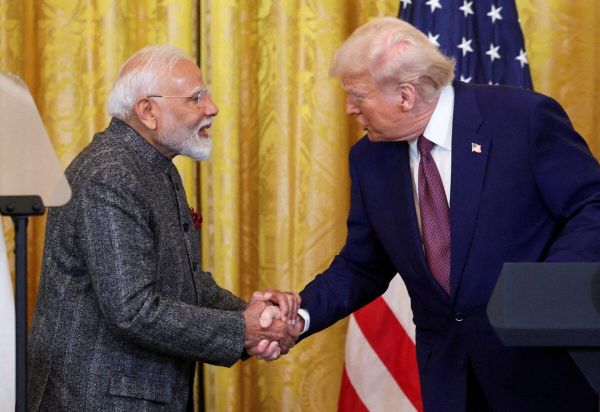
Today, this narrative that Muslim women need Western intervention to be “freed” continues to be utilized. For instance, the United States invasions of Iraq and Afghanistan, as well as the ongoing US-Israel war against Iran, all employ the same tactics. The recent invocation of “saving” Iranian women is being used to justify the United States and Israel’s military intervention. In her article “Women’s Liberation or Propaganda Tool?” journalist Ashwaq Masoodi notes that both the Israeli prime minister and President Donald Trump have claimed that the war will “liberate,” “free,” and reconnect Iranian women with “women’s rights”.
But if these global leaders are so concerned about “women’s rights” in Iran, then why did they specifically target an all-girls’ elementary school in Minab, killing at least 170 students in February 2026? (Al Jazeera Staff).
Is Islam Oppressive Towards Women?
In Iran, 99% of female youth (ages 15-24) were considered literate according to a 2023 estimate by the World Bank. Moreover, approximately 58% of PhD students in Iran are women, a number even higher than estimates in the United States (HR News). So why does the West describe Iranian women as oppressed individuals?
Historically, the Islamic world was often ahead in terms of giving women their due rights. Within the Ottoman Empire, women had the right to go to court, enjoy daily activities, participate in family business, marry with their own consent, and maintain financial independence from their husbands (Majumdar). The British writer, Lady Elizabeth Craven, even traveled through Constantinople and documented her disbelief over the liberties that Turkish women seemed to enjoy compared to what she knew at home, stating, “…I think I never saw a country where women may enjoy so much liberty, and free from reproach, as in Turkey…I think no women have so much liberty, safe from apprehension, as the Turkish–and I think them in their manner of living, capable of being the happiest creatures breathing.”
These rights didn’t originate in the Ottoman Era; they started in 600 CE under the rule of the Prophet Muhammad, peace and blessings be upon him. The Quran granted women the right to inheritance, divorce, knowledge, property, and consent for marriage centuries before the West did. Khadijah bint Khuwaylid, the Prophet’s first wife, inherited money from both of her previous husbands before her marriage to the Prophet and became one of the richest women among the Quraysh, employing traders to take her caravans on trade routes to Yemen and Syria (“Khadijah (ra): His First Love, Our First Mother”). The Prophet’s fourth wife, Hafsa bint Umar, learned how to read and write from a skilled woman named Ash-Shifa’ bint Abdullah. She was particularly intelligent in writing, literacy, medicine, and calligraphy at a time when literacy of any kind was considered rare ("Hafsa bint Umar (ra): Saved by Devotion").
While these accomplishments are quite outstanding, it must be noted that these women achieved all of this within the bounds of Islamic law by adhering to modesty requirements and avoiding gender mixing.
However, it would take the West until 1792 to grant women some of the most basic human rights, including divorce. The divorce law was granted in France under the First Republic, which would later be abolished and re-established in 1844 under the Third French Republic (Ohio University).
So, does the West actually have women’s rights at the forefront of its agenda? Historically, women’s rights have been of little priority to the Western world when compared to Islamic societies. This pattern has not disappeared with time; it has taken a different form.
Today, women in the West are coerced by the beauty industry, social media, and modeling to expose their bodies online. There they face intense scrutiny, which contributes to further cosmetic surgeries and eating disorders. 69-84% of American women struggle with body dissatisfaction (Runfola et al.). Moreover, women in the West are often encouraged to wear less in comparison to their male counterparts, a standard that ultimately benefits the same male gaze the West claims to be protecting women from.
Girls are encouraged to cake their faces with makeup and wear skin-tight, revealing clothes. Yet when a woman chooses to dress modestly, countries like France and Austria impose the Anti-Face Veiling Act, the School Headscarf Ban, or the banning of hijabs in sports (Amnesty International).
If the West is so focused on granting women personal autonomy, then why are they so closely monitoring and surveilling what it is a woman should and should not wear? It’s the civilizing mission by another name, pressurizing women to dress for the male gaze—calling it liberation. Alongside recent developments in OnlyFans and the Epstein files, it is clear that granting women liberty and safety is not at the forefront for Western political leaders.
Conclusion
This article traced the niqab’s controversy back to its roots. It explores the civilizing mission in French colonial Algeria, where the veil kept women out of the colonizer’s reach and became a target for imperialist feminism. From the invasions of Iraq and Afghanistan to the current war on Iran, such tactics are still used today. Why? Because the West recognizes the true power of the veil. After all, if the veil were widely embraced in Western culture rather than stigmatized, it would be much harder to profit from or objectify women’s bodies the way Western culture does.
Is the West truly caring about women’s “freedom” by trying to ban the niqab? Or are we simply considered objects that they can control, dictate, and profit off of as they please?
Works Cited:
Al Jazeera Staff. "US responsible for deadly attack on Iranian school: Amnesty International." Al Jazeera, 16 Mar. 2026, www.aljazeera.com/news/2026/3/16/us-responsible-for-deadly-attack-on-iranian-school-amnesty-international. Accessed 30 July 2026.
Amnesty International. "France: Hijab ban in all sports would violate human rights and target Muslim women and girls." Amnesty, Amnesty International, 18 Feb. 2025, www.amnesty.org/en/latest/news/2025/02/france-hijab-ban-in-all-sports-would-violate-human-rights-and-target-muslim-women-and-girls/.
BBC News. "What's the difference between a hijab, niqab and burka?" BBC, BBC News, 7 Aug. 2018, www.bbc.co.uk/newsround/24118241. Accessed 30 July 2026.
Fanon, Frantz. “Algeria Unveiled.” A Dying Colonialism, translated by Haakon Chevalier, Grove Press, 1967, pp. 37-44.
"Hafsa bint Umar (ra): Saved by Devotion | The Firsts." Yaqeen Institute, 16 Nov. 2019, yaqeeninstitute.org/watch/series/the-firsts/hafsa-bint-umar-ra-saved-by-devotion-the-firsts. Accessed 31 July 2026.
HR News. "Iranian Women Graduate in STEM at Nearly 3× the Rate of U.S. Women — and Has 5× More PhD Students Per Capita." HR News, 7 Mar. 2026, hrnews1.substack.com/p/iranian-women-graduate-in-stem-at. Accessed 30 July 2026.
Kebsi, Jyhene. "Unveil Them to Save Them: France and the Ongoing Colonization of Muslim Women's Bodies." Berkley Center, Georgetown University, 13 May 2021, berkleycenter.georgetown.edu/responses/unveil-them-to-save-them-france-and-the-ongoing-colonization-of-muslim-women-s-bodies. Accessed 30 July 2026.
"Khadijah (ra): His First Love, Our First Mother." Yaqeen Institute, 16 Nov. 2019, yaqeeninstitute.org/watch/series/the-firsts/khadijah-his-first-love-our-first-mother. Accessed 31 July 2026.
Kostbade, Emily. "Unveiling the Other: A Commentary on Colonialism, Orientalism, and the Mission Civilisatrice." Scholar Works, Western Michigan University, 27 Apr. 2023, scholarworks.wmich.edu/honors_theses/3706/.
Majumdar, Ananda. "Role of the Royal Women in the Ottoman Kingdom: A Power Concept." Research Gate, Feb. 2023, www.researchgate.net/publication/368478504_ROLE_OF_THE_ROYAL_WOMEN_IN_THE_OTTOMAN_KINGDOM_A_POWER_CONCEPT. Accessed 30 July 2026.
Masoodi, Ashwaq. "Women's Liberation or Propaganda Tool?" Nieman Reports, 22 May 2026, niemanreports.org/womens-liberation-propaganda-tool-iran-war-afghanistan-israel/. Accessed 30 July 2026.
Ohio University. "Divorce and Women in France." Ohio, James Chastain, 20 Feb. 1999, sites.ohio.edu/chastain/dh/divorce.htm. Accessed 30 July 2026.
Runfola, Cristin D., et al. "Body Dissatisfaction in Women Across the Lifespan: Results of the UNC-SELF and Gender and Body Image (GABI) Studies." PubMed Central National Library of Medicine, PubMed Central, 16 Aug. 2013, pmc.ncbi.nlm.nih.gov/articles/PMC3745223/. Accessed 31 July 2026.
“Surah Al-Ahzab - 59.” Quran.com, quran.com/al-ahzab/59/tafsirs/en-tafsir-ibn-kathir. Accessed 31 July 2026.
“Surah An-Nur - 30.” Quran.com, quran.com/an-nur/30/tafsirs/en-tafsir-ibn-kathir. Accessed 31 July 2026.
World Bank. "Literacy rate, adult female (% of females ages 15 and above) - United States, Iran, Islamic Rep." Data, World Bank, Feb. 2026, data.worldbank.org/indicator/SE.ADT.LITR.FE.ZS?locations=US-IR&name_desc=true. Accessed 30 July 2026.