Islamophobia in the Texas School Board of Education


Ibrahim Safi and Naafay Bajwa – The Public Trust
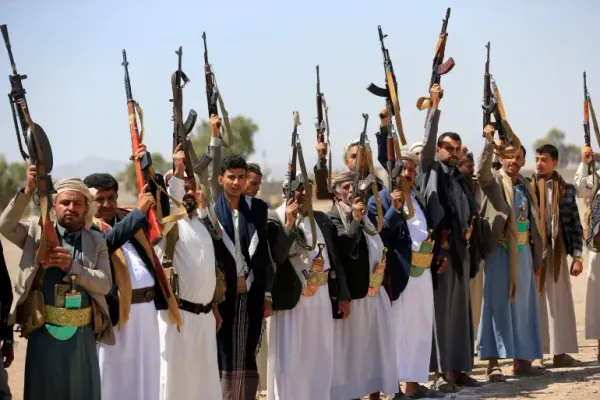
After a vote from the Texas school board on June 26th 2026, several amendments were introduced to the Texas state education system (The Guardian). The most famous was the introduction of Bible studies in the curriculum for all public schools. Another amendment to the syllabus that has gained a lot of attention possesses quite the title: “Explaining early Islam in terms of the Prophet Muhammad [peace and blessings be upon him]’s brutal military campaigns against Jewish and Christian tribes, the institutionalization of slavery and the taking of female captives as harem slaves,” whilst also advocating for the removal of any mentions of contributions from Muslim scientists and thinkers, along with the labeling of Islam as a “terrorist religion” (The Guardian). In this article, we will be debunking each of the points raised by the Texas school board, hence proving it to be a clear act of misinformation and slander against the Muslim faith, whilst highlighting the rise of anti-Muslim politics in the United States.
Claim 1: Brutal early Islamic campaigns against Jewish and Christian tribes
The State of Medina Munawwarah, under the leadership of Prophet Muhammad (peace and blessings be upon him), formed treaties with several Arab tribes, some pagan, some Muslim, some Jewish, and some Christian (Fred M. Donner). These were political treaties that ensured terms of cooperation and coexistence, with clear stipulations in case of a violation of the treaty by either faction (Fred M. Donner). Such political treaties exist to this day under international law; their violation results in political isolation and pariah status.
Historically, three Jewish tribes broke their treaties with the state of Medina:
Banu Qaynuqa, who were expelled as a result; Banu Nadir, who were also expelled; and Banu Qurayza, whose male warriors were executed, as they had participated in treasonous violence against the Medina state during the Battle of the Trench. In the case of Banu Qurayza, their punishment was deliberated by Sa’ad ibn Mu’adh, chief of the Arab Aws tribe, who were close allies of Banu Qurayza before their betrayal, ensuring a fair punishment (Majid Khadduri; Sahih al-Bukhari 4121).
In all cases, these punishments were the result of treason being committed, which in most countries, to this day, is punishable by the death penalty, including in the US. Jewish tribes that honored treaties with Muslims were left undisturbed and lived alongside Muslims for centuries, a pattern seen amongst the Andalusian Jews, Anatolian Jews, and the Mizrahi Jews of the Levant, Iran, and Central Asia, to name a few (Hugh Kennedy). In each case, honoring agreements and following the law granted such minorities the ‘dhimmi’ or ‘protected’ status under Islamic law, a principle established by the Prophet (peace and blessings be upon him) (Majid Khadduri).
With Christian tribes, the argument gets even weaker: there are very few cases of Christian tribes breaking treaties with the early Muslims, so there was no need to engage in conflict with them. Whilst political struggles may have existed, from the wars with the Byzantine Empire to the Crusades, rarely did a Muslim side ever mistreat or expel their Christian subjects, with the few occurrences of such being the exception rather than the norm.
Throughout history, and especially before the destabilization of the Middle East in the last 20 years, most Middle Eastern countries had sizable Christian populations, all tracing their roots back to pre-Islamic times. Egypt, to this day, has a sizable Coptic population and is believed to have only become a Muslim-majority country in the 1200s. Before Syria’s civil war, which began in 2011, the nation was home to around 2.5 million Christians, with the number decreasing to an estimated 500,000 to 1 million today (Archons of the Ecumenical Patriarchate). Iraq, before the 2003 invasion, also had an unignorable Christian population. In many nations, including Palestine, Lebanon, and Iraq, wars instigated by the West (via Israel or America) have resulted in the exodus of the long-standing Christian populations, who predate the Prophet Muhammad (peace and blessings be upon him) by hundreds of years (Haerpfer, Christian; Hugh Kennedy).
Claim 2: Institutionalization of slavery in Islam
This is perhaps one of the more loaded claims presented. Whilst Islam never proclaimed total abolitionism, as slavery was much the norm across the world and present in all civilizations at the time, it heavily restricted it and encouraged the emancipation of slaves in countless situations. Take these verses from Surah Al-Balad (The City) (8-18):
أَلَمۡ نَجۡعَل لَّهُۥ عَيۡنَيۡنِ
Have We not made for him two eyes?
وَلِسَانٗا وَشَفَتَيۡنِ
And a tongue and two lips?
وَهَدَيۡنَٰهُ ٱلنَّجۡدَيۡنِ
And have shown him the two ways?
فَلَا ٱقۡتَحَمَ ٱلۡعَقَبَةَ
But he has not broken through the difficult pass.
وَمَآ أَدۡرَىٰكَ مَا ٱلۡعَقَبَةُ
And what can make you know what is [breaking through] the difficult pass?
فَكُّ رَقَبَةٍ
It is the freeing of a slave
أَوۡ إِطۡعَٰمٞ فِي يَوۡمٖ ذِي مَسۡغَبَةٖ
Or feeding on a day of severe hunger
يَتِيمٗا ذَا مَقۡرَبَةٍ
An orphan of near relationship
أَوۡ مِسۡكِينٗا ذَا مَتۡرَبَةٖ
Or a needy person in misery
ثُمَّ كَانَ مِنَ ٱلَّذِينَ ءَامَنُواْ وَتَوَاصَوۡاْ بِٱلصَّبۡرِ وَتَوَاصَوۡاْ بِٱلۡمَرۡحَمَةِ
And then being among those who believed and advised one another to patience and advised one another to compassion.
أُوْلَـٰٓئِكَ أَصۡحَٰبُ ٱلۡمَيۡمَنَةِ
Those are the companions of the right.
According to the Mufassirun (authors of the exegesis of the Quran), freeing a slave is given a similar level of virtue as feeding someone lacking food (in hunger), taking care of an orphan, or helping the destitute, hence bolstering the action as a virtuous and noble act (Ibn Kathir). Now, a serious question does need to be raised: if the Islamic civilization derives its meaning and legitimacy from the Quran, the unaltered message from God, and the Quran proclaims that freeing of slaves is inherently virtuous, then how can Islam be said to advocate for institutionalized slavery?
This accusation is coming from people who not long ago defended the Confederate States of America’s war against the Union, a war in which a major goal of the Confederacy was the preservation of slavery. There are indeed a myriad of verses in the Quran and statements by the Prophet (peace be upon him) which encourage the emancipation of slaves, and also establish guidelines for their treatment, which was significant for the time, be it via almsgiving or by mandating equal food and clothing to slaves (At-Tabari).
In fact, do recall that earlier I mentioned that Egypt became Muslim majority around the 1200s, during which time members of their ruling class were called “Mamluks,” who were literally slaves of the ruler, and who became some of the most powerful figures in the Middle East for 300 years. So, certainly in Islam, whilst slavery did exist, they were seldom treated as chattel slaves as was the norm in the West, but rather had firm rights, guaranteed by the Sharia.
Claim 3: Taking of female captives as Harem slaves
This topic also carries a lot of weight. Indeed, the point discussed here is the keeping of concubines, which has been practiced in most historical civilizations. However, unlike other civilizations, Islam placed strict restrictions upon concubineship and established a clear purpose (Kecia Ali). The main reason for this institution was to provide a means for displaced women to enter an Islamic household during classical times. This was a stark contrast to the practices of other civilizations, where women, the most vulnerable victims of war, were subject to rape, kidnapping, or both.
Islamic law stated that one was allowed to possess a concubine, so long as he would treat her fairly. The law also provided a confirmation of legal responsibilities and guidelines, such as providing for her needs, recognition of paternity, strict laws on intercourse, the prohibition of intercourse if she was already married, and many others (Kecia Ali; Jonathan A.C. Brown). To this day in other civilizations, as recently as the invasion of Iraq or the Israeli genocide of Palestine, genocidal rape and kidnapping are common and affect millions, a filthy component of war that Islam sought to restrict. Now, in a twist of irony, ill-intentioned politicians are framing this Islamic institution of security as a tool for lustful exploitation, whilst being guilty of such themselves on countless occasions.
Claim 4: Islam being a Terrorist Religion
Truly, when it comes to the misinformation campaigns of recent times, this may just be the most elaborate. The state of Texas has seen many campaigns premised on banning “Sharia law,” often lacking knowledge of what said law even entails (Dallas News). Targeted campaigns financed by many lobbying groups, including some international ones, frame local Muslim populations as terrorists in their own homeland, as famously seen with the incident involving the East Plano Islamic Center (EPIC). Many films produced over the past 20 years clearly depict Muslims or Arabs as terrorists and brutes, and normalize their killing. These amendments are merely the latest addition to a long laundry list of slander against Muslims, clearly funded in part by Zionist organizations and utilized to distract the population from a failing economy and corrupt establishment. Who slaughtered hundreds of thousands of people in Iraq? Who created an ethnostate in the Middle East, resulting in the displacement and exodus of millions? Who caused the refugee crisis that destabilized social environments in Europe? Whom, as an establishment, are providing the total cover-up of the Epstein files, proving a horrific, nauseating chain of child and women sex trafficking? Their accusations lobbed at the Muslims serve merely as a distraction from their own crimes carried out for their own agendas; this is merely the latest in the list.
The corrupt masterminds of the West have skillfully crafted a fear-inducing, grotesque picture of Islam as a backward, cruel religion. In reality, Islam has historically introduced countless regulations that have been of benefit to the societies that are exposed to them, especially when it comes to war. Islam promotes an inclination towards peace, with the Prophet Muhammad (peace be upon him) stating, “Do not wish to meet the enemy in battle, but if you meet them, be steadfast” (Sahih al-Bukhari 3026). The truth is, many of the politicians spewing such vitriol towards Islam know that they are preaching nothing but lies. Islam’s prohibition of harmful industries such as alcohol, gambling, and interest-based banking would actually benefit the common American. However, if these industries were weakened, it would be the wealthy who suffer, and with politicians receiving more donor money than ever before, there is a clear motive behind the picture they paint. Islam seeks to elevate a people, and the wicked seek to drive them into the ground.
Works Cited:
Archons of the Ecumenical Patriarchate. “Archons | Syria’s Christian Population Faces an 80 Percent Decline | Orthodox Observer.” Orthodox Observer, orthodoxobserver.org/archons-syrias-christian-population-faces-a-declined-of-80-percent/. Accessed 2 July 2026.
The Qur'an. The Qur'an. Translated by M. A. S. Abdel Haleem, Oxford UP, 2004.
Sahih al-Bukhari. Translated by Muhammad Muhsin Khan, Darussalam, 1997.
Tafsir al-Tabari. Jāmiʿ al-Bayān ʿan Taʾwīl Āy al-Qurʾān. Edited by Abdullah al-Turki, Dar Hajr, 2001.
Sahih Muslim. Translated by Abdul Hamid Siddiqui, Sh. Muhammad Ashraf, 1976.
Tafsir Ibn Kathir. Tafsīr al-Qurʾān al-ʿAẓīm. Dar Tayyibah, 1999.
Fred M. Donner. Muhammad and the Believers: At the Origins of Islam. Harvard UP, 2010.
Michael Lecker. The Constitution of Medina: Muhammad's First Legal Document. Darwin Press, 2004.
Jonathan A. C. Brown. Slavery and Islam. Oneworld Publications, 2019.
Kecia Ali. Marriage and Slavery in Early Islam. Harvard UP, 2010.
Majid Khadduri. War and Peace in the Law of Islam. Johns Hopkins Press, 1955.
Hugh Kennedy. The Great Arab Conquests: How the Spread of Islam Changed the World We Live In. Da Capo Press, 2007.
Allen, Silas. “Texas Board Approves Social Studies Standards on Islam.” Dallas News, 25 June 2026, www.dallasnews.com/news/education/article/texas-board-islam-standards-22319935.php. Accessed 30 June 2026.
Guardian staff reporter. ““Weaponizing Ignorance”: Muslims Bear Brunt as Texas Republicans Make Hate Mainstream.” The Guardian, The Guardian, 29 June 2026, www.theguardian.com/us-news/2026/jun/29/texas-muslims-hate-speech. Accessed 30 June 2026.
Haerpfer, Christian, et al. “World Values Survey (1981-2022). Trend File.” WVSA - World Values Survey Association, 9 July 2024, https://doi.org/10.14281/18241.27.